Posts

Showing posts with the label fairy tale

Trunk: Stories That Took The Long Way - Various

Image
Published by Metaphorosis Publishing, 2026. Edited by B Morris Allen. Short story collections are interesting to read cover-to-cover. No matter how good the collection is, there will always be some that grab your attention more than others, particularly if the collection is from a number of authors, rather than one. Trunk is one such collection, and what makes it an even more intriguing beast is that the connective tissue between these stories (other than they fact that they all fall into the fantasy or science-fiction genres) is that, in order to be considered for inclusion, the stories must have been rejected for publication multiple times. Each story ends with a short blurb about the author, followed by the history of rejection for the story that you have just read. Almost by necessity, then, the stories in this collection are a little odd, a little 'out there', a bit different in some way to your 'standard' short story, although most of them did hold my interest to ...

Alice's Adventures in Wonderland - Lewis Carroll

Image
Published in an omnibus edition by Penguin Classics: London, England, 1998. First published individually 1865. 'The Centenary Edition' includes 'Alice's Adventures in Wonderland' and 'Through the Looking Glass' with commentary and short stories. You know, I've never read Alice in Wonderland before!  The closest I've come is a memory I have of a relief teacher in primary school reading out an excerpt from the chapter 'A Mad Tea Party', including the unanswerable riddle about a raven and a writing desk, a clock that tells you what day it is, and a story about sisters in a treacle well who draw treacle. It is very odd, but I remember thinking that the puns were clever, and thus, my impression of the Alice stories have been - from childhood - just that: odd, but clever. Maybe I had built it up too much in my imagination. This first Alice story is certainly odd! But clever...? Maybe...? The edition I read has many endnotes, many of which try to ti...

Pinocchio - Carlo Collodi

Image
Published by Fabbri Publishing Ltd: Barcelona, 1992. First published as a novel in Italian, 1883. What a truly weird book. This is the OG version of Pinocchio, and it feels very dated, and odd. I once read half of the book The Adventures of Roderick Ransom by Tobias Smollett, and it gives me vibes of that, in the way the story unfolds without much overarching structure; rather, it simply feels like a rambly bed time story being continuously extended with plot points that feel like the author is just going: "and then, this happened!"  In some ways this makes sense, as the original stories were published in serial format before being grouped together as a novel, but authors like Charles Dickens shows that these can still be coherent narratives. Pinocchio doesn't really worry about things like that! Sure, there is a through-line in that Pinocchio is a disobedient puppet who continuously makes poor choices - surely, meant to be a morality lesson for the reader - but other bit...

Inkheart - Cornelia Funke

Image
Published by The Chicken House: Somerset, UK, 2004. Originally published in Germany as Tintenherz, 2003. Translated from German by Anthea Bell. I read this book in the background of English classes during silent reading time, and honestly, if I had been more organised and found another book, I probably wouldn't have finished it. It's very slow. Having some awareness of the book - mostly by knowing there was a movie based on it some years ago - I knew that Mo, the father figure in the book, has the ability to "read characters out of books." That is a hugely important part of the book, and not really a spoiler; its important to the set up. And yet, we don't learn about that ability - we're not even absolutely sure that the book is a fantasy - until chapter 16, which begins on page 143 out of 543. There are hints, but only hints. And yes, books can work well when they drop hints about things without outright telling you, but there needs to be other interesting th...

Enid Blyton's Brer Rabbit Book - Enid Blyton

Image
Published by Dean and Son Ltd: London, 1963. I needed a book with an animal protagonist, and remembered this book I read a few times as a child. After rereading it, I'm not super convinced that Brer Rabbit is a protagonist in the traditional sense - more of an anti-hero or even an antagonist at times - but the book still fits the brief over all. This is a collection of short fable-like chapters, each starring a somewhat anthropomorphised animal (usually Brer Rabbit) and usually having some sort of conflict where the smarter creature defeats the dumber creature. It is not always clear how anthropomorphised these animals are; they live in houses, they smoke cigars, all of them eat both meat and greens, and the male animals seem to be quite keen on 'Miss Meadows and the girls' (who might be human??) and yet the "carnivores" are often trying to eat the "herbivores", and at times they live in their traditional locations, such as ponds or briar-patches. Each s...

Far Far Away - Tom McNeal

Image
Published by Definitions/Random House Children's Publishers: London, 2014 (2013). This is an odd book. It is a little bit fairy-tale - a label that is made more explicit by the inclusion of Jacob Grimm's ghost as the narrator! It is a little bit horror, but only subtly, particularly to begin with. It is a little bit young adult romantic drama, but with one of the pair possibly under an enchantment. It is a little bit coming-of-age and taking responsibility for the difficulties of life, but this is told through the main boy's father's storyline (a very distant B-Plot), as well as through a Mastermind style TV show. It feels old-fashioned, but also is set in a vaguely contemporary world. It is also a book I almost accidentally got through. I picked it up off my classroom shelf and had finished it in two days.  As mentioned, the narrator is the ghost of Jacob Grimm, a spirit who can only be heard by the main protagonist, Jeremy Johnson Johnson (both his parents had the sam...

Tress of the Emerald Sea - Brandon Sanderson

Image
Published by Gollancz/Hachette UK: London, UK, 2024 (2023). The back cover promises a story that will appeal to fans of The Princess Bride, and that - along with being a stand-alone book that isn't over 500 pages - was enough to sell this as Elise's first exposure to Brandon Sanderson. Tress (whose real name is Glorf, but who prefers to be known as Tress due to her unruly hair) lives on a planet where the 'oceans' are made up of spores dropped from the various moons, each one a different colour and having a different (usually deadly) reaction to water. When her true love gets captured by the evil Sorceress of the Midnight Sea, Tress must sneak off her island home and set sail to rescue him. Along the way she encounters numerous characters to aid or hind her, from the talking rat Huck, to the chronically-poor-aim assistant cannonsmaster Ann, to Fort, a huge mute who can only communicate via a magical writing board. In true Sanderson fashion, each of these characters has ...

Robin Hood - Carola Oman

Image
Published by JM Dent & Sons Ltd: London, UK, 1973. First published 1939. A slightly old-fashioned book, seemingly written to intentionally resemble fairy tales or 'older' stories (though, being written in 1939 it may also just be old-fashioned), Robin Hood is a collection of stories about the titular outlaw, collected and retold by the author when she was approached and asked to do so. The book begins with Robin Hood already established as an outlaw, and we never get a definitive answer about his origins or family - although we do eventually meet some relatives. We also stay at a distance from his relationship with Marian; she does come into the story eventually but Robin is reluctant to pursue a relationship with her, and the reasons for this are hidden until very near the end of the book. Mostly, then, this is a series of short adventures that are vaguely linked. Different sections of the book may promise that they are about 'Robin and Sir Richard' or 'Robin a...

A Thousand and One Alibis - Elle Hartford

Image
Published as an eBook by Elle Hartford, 2024. Volume 7 of 'The Alchemical Tales.' This is the second ebook I have received as a free giveaway through LibraryThing, although I'm not sure how often I will apply for them, considering that ebooks really aren't my favourite medium to read in. However, having received A Thousand and One Alibis, I was 'required' to read and review it.  As I said last time, what a sacrifice! It is interesting to jump into a series on Book 7, but I very quickly got the gist of this world: we are in a fairy-tale inspired fantasy world, with each book vaguely inspired by (though not beholding to) the plot of a specific fairy-tale. In this instance, we meet characters called Jasmin, Ja'far and Gene (that one took me a moment), we have the setting of a vaguely Middle-Eastern inspired desert island, and also encounter a mysterious castle that possibly has its source in magic. However, the story that unfolds is not 'Aladdin' at all...

The Borrowers - Mary Norton

Image
Published by Aldine Paperbacks/J. M. Dent & Sons Ltd.: London, 1968 (1952). This classic children's book introduces Pod, Homily and Arrietty, three tiny humans (borrowers) who live under the floorboards in the home of an elderly woman. The borrowers, as their name suggests, 'borrow' things from the human world and use it to furnish their own dwelling, along with gathering enough food to live on. As the story progresses, Arrietty, the daughter in the family, befriends a boy who is staying in the house. This is seen as something very dangerous (despite Pod having his own friendship with the mildly senile home-owner) and does eventually lead to a confrontation with the dangerous housekeeper. The story of the book is very simple plot-wise, leaving a lot up in the air for possible sequels (of which there are four). It is also slightly melancholic, particularly when talking about the number of borrowers in the house compared to in the past. The framing-device, which consists ...

The Boy, The Mole, The Fox and The Horse - Charlie Mackesy

Image
Published by Ebury Publishing: England, 2019. This odd little book has had a short film adaptation made of it that yesterday won an Oscar! I had heard of it, but only read it because a student left a copy on my desk. It didn't take very long to read as most pages have very little text. It also has no page numbers and little punctuation, so I've kept that element in my quotes.  Really, there is very little to this book other than cute drawings and fairly twee life lessons. " "What do you think is the biggest waste of time?" "Comparing yourself to others," said the mole"" It definitely is cute, and there is a nice through-message about accepting one another and friendship that could be helpful for parents reading to their children.  There are also some fun jokes...  "I got you a delicious cake," said the mole "Did you?" "Yes" "Where is it?" "I ate it," said the mole "Oh" "But I got...

Politically Correct Bedtime Stories - James Finn Garner

Image
Published by Souvenir Press Ltd.: London, 2001 (1994). This ridiculous and very short book retells a number of classic bedtime stories in a tongue-in-cheek version of "political correctness." As an example of what this looks like, when introducing the three bears, our narrator comments that "they all lived together anthropomorphically in a little cottage as a nuclear family. They were very sorry about this, of course, since the nuclear family has traditionally served to enslave womyn, instil a self-righteous moralism in its members, and imprint rigid notions of heterosexuality roles onto the next generation. Nevertheless, they tried to be happy and took steps to avoid these pitfalls, such as naming their offspring the non-gender-specific 'Baby'." (page 39) The stories within are all like this, and many diverge from the plot of the original quite substantially - usually in a manner that makes a joke about what 'politically correctness' might deem to b...

Hogfather - Terry Pratchett

Image
Published by Corgi Books: London, 2006 (1997).  First published 1996. I remember Hogfather being one of my favourite Discworld novels when I was younger, mostly because of one scene in particular. The wizards of Unseen University become aware that there is an 'excess of belief' in the world (because, unbeknown to them, the 'Hogfather' - who is Discworld's equivalent of Santa - has been 'killed'). This excess of belief, coupled with the wizards being in a fairly magical location, means that as they discuss hypothetical beings who could conceivably exist - such as a 'hair-loss fairy' or the 'god of hangovers' - these beings begin to spring into existence. The wizards joke about this, positing the existence of an "odd-sock monster" who eats one sock from pairs put into the laundry. Then, when the odd-sock monster inevitably springs into existence, the wizards discuss going into the laundry area to look for it, while also admitting some...

The Amazing Maurice and His Educated Rodents - Terry Pratchett

Image
Published by Corgi Books/Random House Children's Books: London, 2011 (2001). Surprisingly, this is only the second Terry Pratchett novel I have ever reviewed on this blog. I say surprising because I have enjoyed Pratchett's works, particularly his the novels set in the satirical fantasy world of  Discworld  for years. This book is the first one written by Pratchett to be aimed at a slightly younger audience than the 'main' Discworld books, and bases the plot around a parody of the Pied Piper story. Maurice is a talking cat, given the power of speech (and intelligence) around the same time and in the same location as a group of rats he now works with. The rats received their intelligence after eating rubbish left outside the Unseen University (a wizarding school). How Maurice received his intelligence is left a mystery for much of the book - but will be fairly obvious if you think about it. Now Maurice and the rats, with the help of a 'stupid-looking kid' who pl...

Percy Jackson and the Sea of Monsters - Rick Riordan

Image
Published by Puffin Books: London, England, 2008 (2006). Book 2 in the 'Percy Jackson' series. Preceded by ' Percy Jackson and the Lightning Thief. ' Followed by ' Percy Jackson and the Titan's Curse. ' As with the previous entry in this series, Percy Jackson and the Sea of Monsters follows the titular Percy Jackson, son of the Greek god Poseidon, as he journeys around modern day America facing updated versions of various Greek legends. In this entry, Percy Jackson's satyr friend Grover has gone missing, and Camp Half-Blood is coming under attack by more and more monsters as its border-magic is beginning to weaken. Percy and Annabeth, along with Tyson (a young Cyclops) set out to the Sea of Monsters to both save Grover and hopefully retrieve the Golden Fleece, which will be able to help strengthen the camp's border-magic. Once again Luke, son of Hermes, appears as one of the villains, and the over-arching plot of Kronos seeking to be resurrected is a...

Percy Jackson and the Lightning Thief - Rick Riordan

Image
Published by Puffin Books: Great Britain, 2013 (2005). Book 1 in the 'Percy Jackson' series. Followed by ' Percy Jackson and the Sea of Monsters. ' This year our school library has been a little less available than in past years due to some building projects on the go in the school, so I have slowly been collecting a variety of books that (hopefully) my students will enjoy. And at times, when the classes are doing independent work and I don't need to be monitoring them as much, I've been reading some of those books for myself.  Percy Jackson and the Lightning Thief is the first in the Percy Jackson and the Olympians series, and was made into a movie which I have seen. However, it is one of those movies that fans of the books were relatively unhappy with, and having read the original book I can now understand why. The differences are numerous. In the book Percy is only 12, Grover the satyr already has his horns, and many elements of the book's quest are ignor...

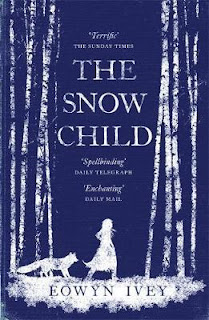
The Snow Child - Eowyn Ivey

Image
Published by Headline Publishing Group: London, 2012. Jack and Mabel are a childless couple now a little beyond childbearing age, living in Alaska in the early 20th century. They have drifted apart, partially due to the grief over the stillbirth that they experienced ten years earlier, and partially due to their own brokenness that keeps Jack silent and Mabel suicidal. They are also struggling to turn their part of the country into a farm, and are low on food and income. On the evening of the first snowfall of winter, they manage to briefly connect with one another, building a child out of snow, and, as the winter continues, begin to believe that this snow child has come alive. Glimpses of a young girl are seen in the woods, usually accompanied by an equally mysterious fox. Yet only Jack and Mabel seem to ever see the girl. This reads like a fairy tale, and is actually inspired by a Russian fairy tale, in which a similarly childless older couple magically bring a snow child to life. Wh...

Animal Farm - George Orwell

Image
Published by Penguin Books: Great Britain, 1977. First published 1945. Animal Farm is a very well-known book, but not a very pleasant one. It presents itself as 'A Fairy Story', telling the story of a group of farm animals who rebel against their farmer, taking over the farm and running it for themselves. At first things seem to go well, but as the story progresses (and as the fierce boar Napoleon begins to assert more and more authority over the other animals) things gradually grow harder and harder for the idealistic animals. Orwell's story is a clear commentary on various revolutionary ideals of his day, most clearly communism, with the animals referring to each other as 'Comrade' and claiming to work for the common good. Unfortunately this commentary also includes the levels of corruption and power that those in leadership in those systems often exhibit. By the end of the story all of the 'good' characters have been suppressed, or worked themselves to de...

The Last Battle - CS Lewis

Image
Published in an omnibus edition with the full Chronicles of Narnia series: " The Magician's Nephew "; " The Lion, The Witch and The Wardrobe "; " The Horse and His Boy "; " Prince Caspian ";  "The Voyage of the Dawn Treader" ;  "The Silver Chair" ; "The Last Battle" , by Harper Collins Publishers: Hammersmith, London, 2010. Originally published 1956. The final book in the Narnia series, The Last Battle appropriates covers the events leading up to and surrounding the end of Narnia itself. The last king of Narnia, Tirian, and his close friend, the unicorn Jewel, enlist the help of Eustace and Jill to do battle against a "false Aslan" and an army of Calormenes. The book is different from the remainder of the Narnia series (aside from The Horse and His Boy ) in that it begins in Narnia, following Narnians, with no one from 'our' world arriving until quite a way in to the book. Even when they do ...

Gawain and The Green Knight - YR Ponsor

Image
Published by Macmillan Publishing Co., Inc.: New York, 1979. This tale is a modern "prose adaptation" of "a poem written about 1400 by an unknown author" (page ix). It tells the story of Gawain, a knight from King Arthur's court, and his encounter with the magical Green Knight. The knight arrives at King Arthur's court and challenges someone to give him a single blow with an axe, which he will return a year and one day later. Gawain takes up the challenge, removes the knight's head with a single stroke and is then horrified when the knight picks up his severed head, reminds Gawain of his promise, and leaves. The story follows Gawain as he seeks the whereabouts of the Green Knight to honour his promise, and spends a lot of time at a castle he encounters on his travels where the queen seeks to seduce him! The story is a fairly simple one, but there are times you can tell the original text was written in a very different time to our own. Durin...